
Before approving a guarana pouch can, ask for documents that identify the finished packaging components and the intended conditions of use. A generic “food-grade plastic” statement is too broad to show that a particular can, lid and liner are suitable for the proposed product. Match the documentation to the material code, pack configuration, contact time and temperature.
GuaranaPouches.com editorial purchasing guide. This article does not certify a packaging material or establish permission to market a guarana pouch in any jurisdiction.
Identify the complete pack before requesting a certificate
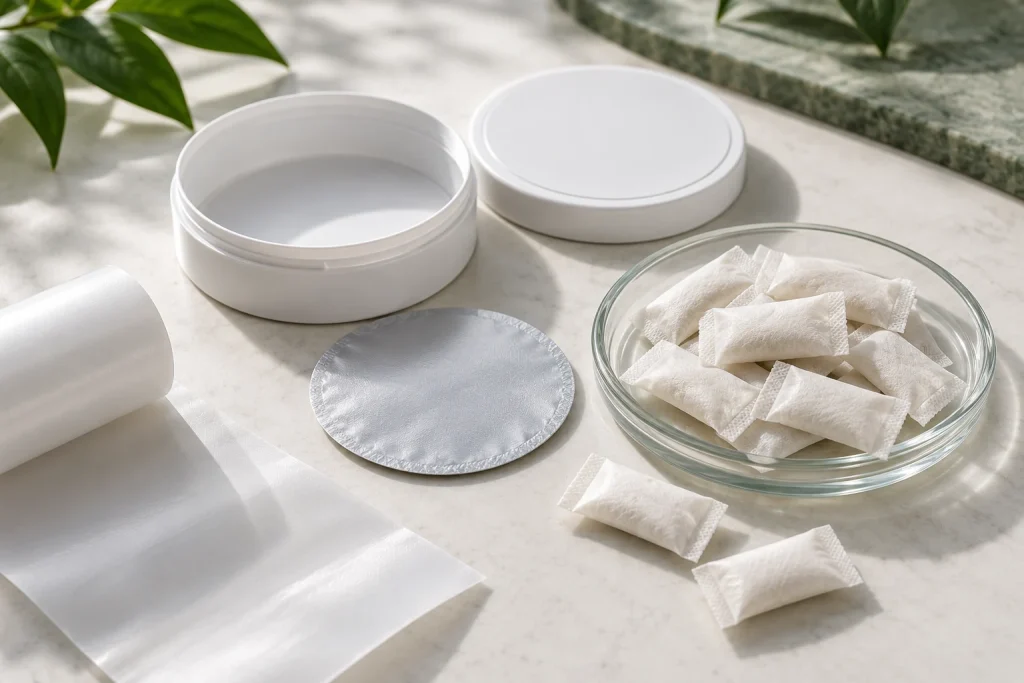
Build a component list for the actual order: can body, lid, liner or seal, and any coating, adhesive or printed surface that the reviewer considers relevant to contact. Add the pouch web as a separate material because it has its own role and exposure conditions. Keep supplier codes and drawing revisions with the list. A supplier’s report for a white can should not automatically be assigned to a different color or liner combination.
The FDA’s packaging terminology distinguishes a food-contact substance, a food-contact material and the finished food-contact article. That distinction helps explain why a resin document and a finished-can assessment may cover different things. Ask the packaging supplier to identify exactly which level its evidence addresses. The reviewer can then decide what additional information is needed for the assembled pack.
Information worth putting on the purchase specification
- Component names, supplier codes and revision numbers.
- Polymer or other material identification, including relevant coatings.
- Intended product, contact arrangement and storage conditions.
- Applicable compliance statement and supporting report references.
- Change-notification requirements for materials and manufacturing.
Read migration evidence alongside the intended use
Migration testing examines transfer from a contact material under defined conditions. The European Commission’s food-contact overview explains that plastic-material testing can use food simulants and specified time and temperature conditions. It also distinguishes overall migration from restrictions on particular substances. A “pass” conclusion without the test conditions omits information needed to judge whether the result is relevant to the proposed pack.
Give the reviewer the intended guarana pouch formulation information and shelf-life claim before selecting a test plan. Ask why the chosen exposure conditions represent the intended use. Do not prescribe a convenient simulant or a short contact time solely because it appeared on another supplier’s report. Also keep chemical suitability separate from pack performance: a migration report does not establish that a lid preserves moisture, survives shipping or gives the pouch its proposed shelf life.
Check what a declaration of compliance actually covers
For EU plastic food-contact materials within the relevant scope, the Commission describes a declaration of compliance supported by documentation. Its overview identifies Regulation (EC) No 1935/2004, Regulation (EC) No 2023/2006 and the plastics measure Regulation (EU) No 10/2011. These references are useful starting points for the qualified reviewer; a regulation number printed on a sales sheet is not a complete review of the material or its use.
Ask for a declaration tied to the supplied article, the issuer and applicable restrictions. Keep the test-report identifiers with it so the evidence can be retrieved later. Food-contact rules are amended, and product classification also matters. Confirm the current requirements for the destination and the specific pouch concept before final approval. Avoid describing a supplier’s generic U.S. or EU statement as worldwide authorization.
| What arrives | What to ask next |
|---|---|
| Resin-only data sheet | How does it support the finished can and its other components? |
| Migration report with a different article code | What documented relationship connects that sample to this order? |
| Declaration with no use conditions | Which product contacts, durations and temperatures are covered? |
| New lid or liner on a repeat order | Has the existing assessment been reviewed for the changed pack? |
Keep material approval separate from shelf-life validation
A buyer may have acceptable material documents and still need evidence that the finished pack performs as intended. Define the handling and storage study separately, using the proposed can, lid and seal combination. Inspect closure performance and evaluate the product against its own specifications. Do not interpret the absence of visible damage as proof that the formulation has remained within specification.
For guarana pouches, connect the packaging review to water-activity and moisture measurements where relevant, and to the finished-pack stability study. Keep a record of the approved packaging version for each study. If the pack changes, ask the technical team whether existing evidence still applies. The pouch-material guide covers the inner web; the outer can should have its own documented review.
Frequently asked questions
Is a “food-grade” declaration enough for guarana pouch packaging?
The phrase alone is insufficient. Ask which article it identifies, which requirements and uses it covers, and what supporting evidence is available.
Does a migration test establish a pouch’s shelf life?
No. It addresses transfer under specified test conditions. Shelf-life validation assesses the product in its intended packaging over the proposed storage period.
Can a new color or liner use the old can’s paperwork?
Only after a competent reviewer establishes that the documents still cover the supplied article and intended use. Request the change assessment instead of assuming equivalence.
References and scope
- FDA: Food Ingredient & Packaging Terms.
- European Commission: food-contact-material legislation overview and amendment links.
- European Commission Joint Research Centre: food-contact-material technical guidelines.
- Private-label guarana pouch RFQ checklist.
References checked 29 October 2026. The component list and document questions are editorial recommendations. A packaging specialist and the responsible regulatory reviewer should assess the actual materials and intended market.