
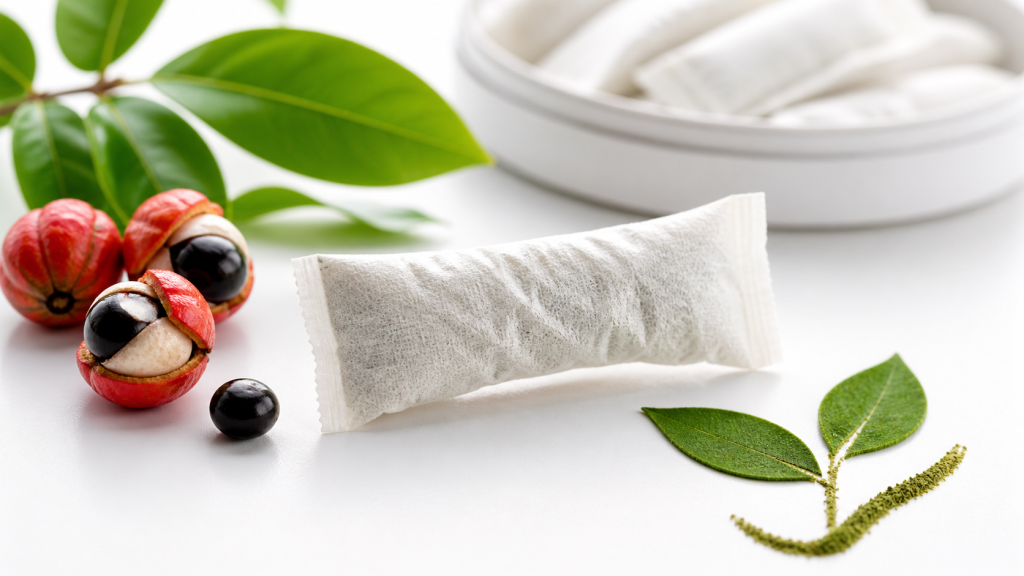
A guarana pouch can be nicotine-free, but the white pouch format alone proves nothing. Slim nonwoven pouches are used for several product categories, so the ingredient list and nicotine declaration—not appearance—answer the question.
Guarana supplies caffeine, not nicotine
Guarana (Paullinia cupana) is a botanical source of caffeine. A formula using 250 mg of extract standardized to 20% caffeine would theoretically contribute 50 mg caffeine. Nicotine is a different active substance and is not naturally supplied by guarana.
Why the products are easily confused
Both categories may use a small white porous pouch, round can and flavors such as mint or citrus. That is packaging technology, not ingredient identity. A product marketed as an “energy pouch,” “focus pouch” or “oral pouch” should still state its active ingredients plainly.
Five label checks
- Look for an explicit nicotine-free statement where permitted and appropriate.
- Read the complete ingredient list for nicotine, nicotine salts or tobacco-derived ingredients.
- Find total caffeine per pouch, not only milligrams of guarana extract.
- Check the number of pouches and serving definition.
- Review age, pregnancy, sensitivity and caffeine warnings applicable to the market.
Nicotine-free does not mean stimulant-free
Caffeine stimulates the central nervous system. FDA notes that excessive caffeine can cause effects including increased heart rate, palpitations, insomnia, anxiety, jitters, nausea and headache. A nicotine-free pouch can therefore still be a high-caffeine product requiring careful dose communication.
Questions buyers should ask manufacturers
Request the formula declaration, raw-material traceability, guarana identity record, lot-specific caffeine assay and finished-pouch results. If the site also produces nicotine products, documented segregation, cleaning and changeover controls are commercially important.
References
Frequently asked questions
Are guarana pouches nicotine free?
A product formulated only as a guarana caffeine pouch can be nicotine free, but consumers and buyers should confirm the complete ingredient specification and finished label.
Why do guarana pouches resemble nicotine pouches?
They may use a similar compact nonwoven format for discreet oral use. A shared physical format does not mean the products contain the same active ingredient.
What label information confirms a nicotine-free product?
Review the full ingredient list, active amounts, nicotine-free statement where permitted, manufacturer documentation and relevant finished-product test specification.
Content reviewed: . Review dates indicate editorial maintenance, not a new clinical study.