
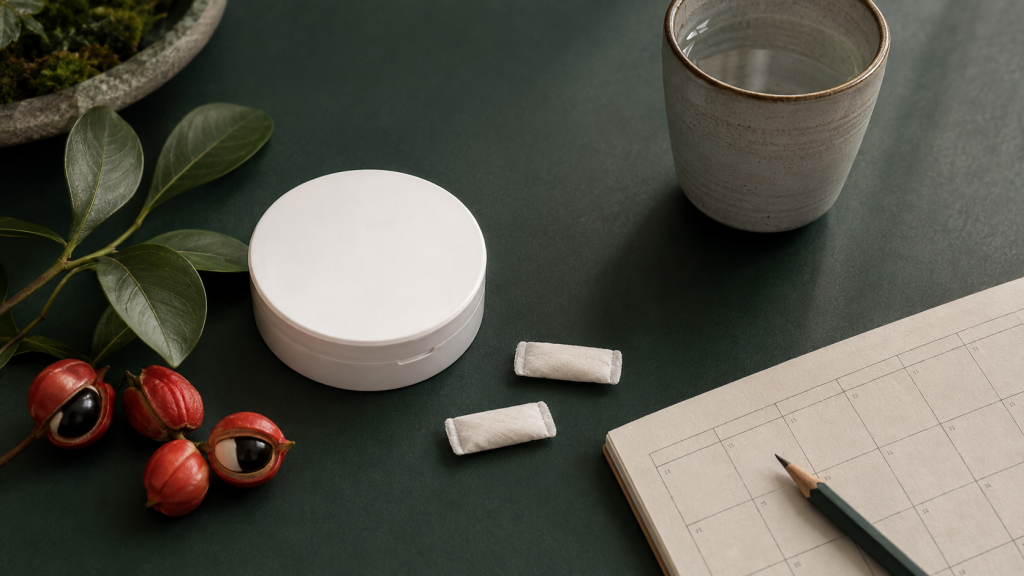
Short answer: yes, regular exposure can produce tolerance to some effects of caffeine, whether the caffeine comes from coffee, tea, a standardized guarana extract or a pouch. If the same pouch feels less noticeable after repeated use, increasing the number of pouches is not the only—or safest—interpretation.
Guarana does not bypass caffeine tolerance
Guarana contains caffeine. Botanical origin may matter to sourcing, taste and formulation, but the body still encounters caffeine. A pouch made with a guarana extract standardized to 20% caffeine should therefore be counted alongside every other caffeine source in the day.
At an exact 20% assay, 200 mg extract theoretically contributes 40 mg caffeine; 250 mg contributes 50 mg. The reliable consumer figure is verified caffeine per pouch, not the weight of extract by itself.
What tolerance actually means
Tolerance is a reduced response to a repeated exposure. It does not develop equally to every caffeine effect, and a less dramatic subjective “kick” does not prove that caffeine has stopped acting. Sleep loss, meal timing, stress, hydration, concurrent products and expectation can also change what a person notices.
This is one reason experienced formulators avoid promising a fixed intensity or exact duration for every user. The pouch can standardize its ingredient content; it cannot standardize the user.
The escalation trap
A common pattern is to add another pouch because the first feels weaker, while forgetting coffee, tea, pre-workout products or caffeinated medicine. That turns a product question into a total-intake problem. Keep a simple three-day record before changing anything:
- verified caffeine per pouch;
- number and timing of pouches;
- all other caffeine in drinks, foods, supplements and medicines;
- bedtime, sleep quality and any headache, palpitations, tremor or anxiety.
EFSA notes that single doses of 100 mg may affect sleep in some adults when taken close to bedtime. Its conclusion that up to 400 mg per day generally raises no safety concern for healthy non-pregnant adults is a population-level reference, not a personal target and not permission to escalate.
What happens when regular caffeine stops
A major review found that validated withdrawal symptoms include headache, fatigue, reduced alertness, drowsiness, irritability and difficulty concentrating. Symptoms typically began 12–24 hours after abstinence, peaked around 20–51 hours and lasted 2–9 days. Withdrawal has been documented at habitual intakes as low as 100 mg per day in controlled research.
Those findings explain why abrupt changes can feel unpleasant. They do not justify diagnosing every headache as withdrawal. Persistent, severe or unusual symptoms deserve clinical assessment.
Is a “caffeine tolerance break” proven?
Searches for “how long should a caffeine tolerance break be” often produce rigid seven-day or two-week schedules. Research supports the existence of tolerance to some effects and a recognizable withdrawal pattern, but it does not establish one universal reset schedule for guarana pouches. Habitual dose, metabolism, health, sleep and the outcome being measured differ among people.
If reducing caffeine, gradual reduction may be easier to tolerate than abrupt cessation. People with a medical condition, pregnancy, significant symptoms or medicines that interact with caffeine should obtain individualized advice rather than following an online calendar.
What responsible pouch labeling should show
- Caffeine in milligrams per pouch and per container.
- The standardized guarana extract specification.
- A clear serving and daily-use direction appropriate to the target market.
- A warning to count caffeine from all sources.
- Traceable lot and finished-product test information.
For product developers, “natural energy” is not a substitute for dose communication. Good labeling makes it possible to identify repeated exposure before tolerance, sleep disruption or withdrawal is mistaken for product inconsistency.
Sources
- Critical review of caffeine withdrawal
- European Food Safety Authority: caffeine
- Pharmacological rationale and caffeine tolerance
Frequently asked questions
Can you build tolerance to guarana caffeine pouches?
Yes. Because guarana supplies caffeine, repeated use can produce tolerance to some caffeine effects. The degree varies, and a weaker sensation does not mean the pouch contains less caffeine.
How long does a caffeine tolerance break take?
There is no universally validated reset period for guarana pouches. Withdrawal often begins within 12–24 hours and may last several days, but tolerance and symptom patterns vary.
Should I take more pouches when one feels weaker?
Do not automatically increase the dose. First total the caffeine from pouches, coffee, tea, energy products, supplements and medicines, and consider sleep and other factors.
Content reviewed: . Review dates indicate editorial maintenance, not a new clinical study.