
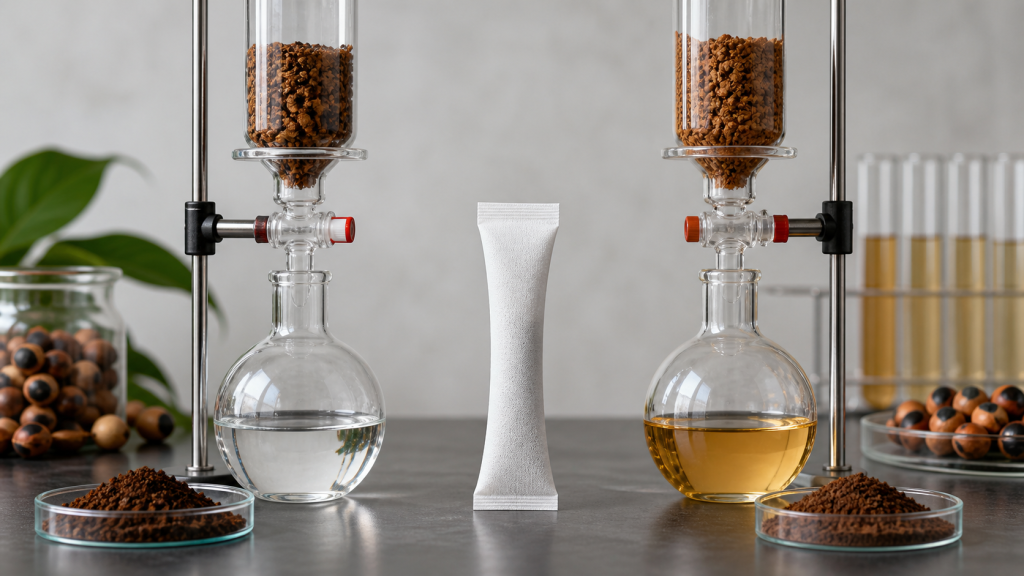
Extraction solvent is not a minor line on a specification sheet. It influences which guarana constituents are recovered, how the powder behaves and what evidence a buyer should request.
Water extraction has a defined compendial example
The USP–NF Guarana Seed Dry Extract monograph describes a water-extracted material with a plant-to-native-extract ratio of 5–7:1 and no more than 12% caffeine, together with a labeled-amount range and a caffeine-to-total-flavonoid ratio. That definition is useful, but it does not cover every commercial guarana extract.
Water–ethanol systems can produce different profiles
Changing solvent composition changes extraction selectivity. Commercial 20% caffeine specifications may use water–ethanol processing, different concentration steps or standardization approaches. A higher caffeine assay does not automatically mean better botanical identity or better pouch performance.
Documentation buyers should compare
- Botanical name, seed part and country of origin
- Solvent system and native extract ratio where applicable
- Carrier type and percentage
- Caffeine acceptance range and HPLC method
- Flavonoid or fingerprint identity data
- Residual-solvent and contaminant results
Flavor and processing consequences
Extracts at the same caffeine level can differ in bitterness, astringency, color, density, hygroscopicity and solubility. Evaluate them in the actual pouch base. An attractive COA number does not predict blend uniformity, release or sensory stability.
Do not relabel one extract as another
If a product claims a specific extraction method, supply-chain records must support it. Switching solvent, carrier or production site is a change-control event and may require renewed testing, sensory approval and label review.
References
Content reviewed: . Review dates indicate editorial maintenance, not a new clinical study.