
A negative DNA result from a processed guarana extract does not automatically show that guarana is absent. Processing can leave little amplifiable DNA. Authentication should match the material's processing history and combine identity evidence with chemical and supply-chain controls.
Editorial scope: technical development and supplier review. Published 16 November 2026. The study and control suggestions below are not reported results from this supplier.
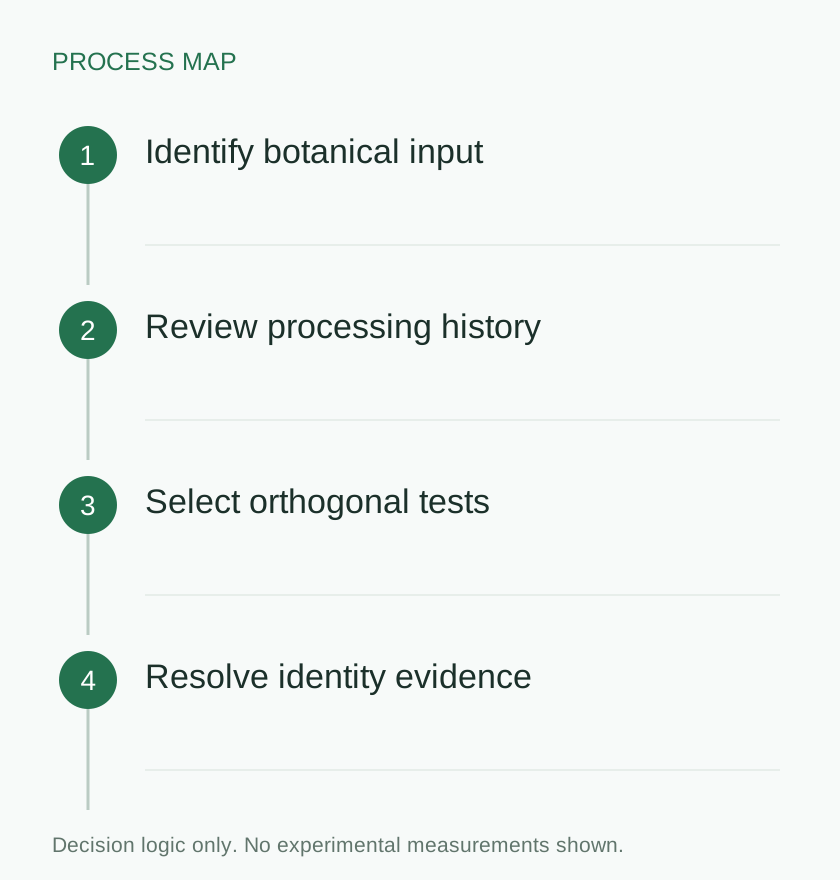
Ask what the laboratory is trying to identify
Whole seeds, milled botanical material and a standardized extract present different analytical questions. Record the botanical identity, plant part, extraction process and carrier. A DNA method evaluates genetic material it can recover and amplify; it does not directly measure caffeine, establish extract strength or prove a particular plant part was used.
Use methods suited to the processing stage
Where authentic raw material is available, a qualified botanical or DNA-based approach can contribute to identity. For an extract, review a justified chemical fingerprint, marker testing and traceability to authenticated input. Processed-material limitations are documented in botanical-authentication research. A single barcode result should not replace an orthogonal identity strategy.
Define how inconclusive results are handled
Require the laboratory to distinguish a confirmed mismatch from an assay that produced no interpretable result. Include controls for extraction and amplification. Before rejecting a lot or changing a claim, investigate method suitability and supply records. Caffeine assay alone cannot authenticate guarana because caffeine occurs in other sources and can be added separately.
Development review checklist
- Identify species, plant part and processing history.
- Request method suitability for the supplied extract.
- Separate absence of amplification from a confirmed identity mismatch.
- Review chemical fingerprint and marker results.
- Link the extract lot to authenticated incoming material.
Buyer questions
Does no amplifiable DNA mean no guarana?
No. The result may be inconclusive after processing; method controls and other identity evidence are needed.
Can caffeine testing prove the botanical source?
No. It measures caffeine under the assay, not the source identity.
Will a 10:1 label authenticate an extract?
No. An extraction ratio is not an identity test.
Should every extract use the same barcode method?
Method suitability depends on the material and process. Universal assumptions can give misleading conclusions.
Which result should trigger supplier investigation?
A confirmed mismatch, inconsistent fingerprint or unexplained traceability gap warrants a documented investigation.
References and scope
- An assessment of the utility of DNA barcoding in the quality control of herbal raw materials, extracts and finished products
Primary study of processed-material limitations. No guarana-specific detection success is asserted.
- FDA: ICH Q2(R2), Validation of Analytical Procedures
Fit-for-purpose analytical validation framework; pharmaceutical guidance used as technical background, not a certification for these products.
Discuss the specification and evidence needed for your project. Send the intended use, destination market and the attribute you need to verify. Commercial capability and acceptance criteria require a project-specific agreement.