
A guarana pouch should not be treated as compostable or recyclable simply because it contains plant material. The used sachet, can, lid and liner are different items. Follow the product’s disposal instructions and local collection rules; without verified composting instructions, keep the used pouch out of compost and recycling streams.
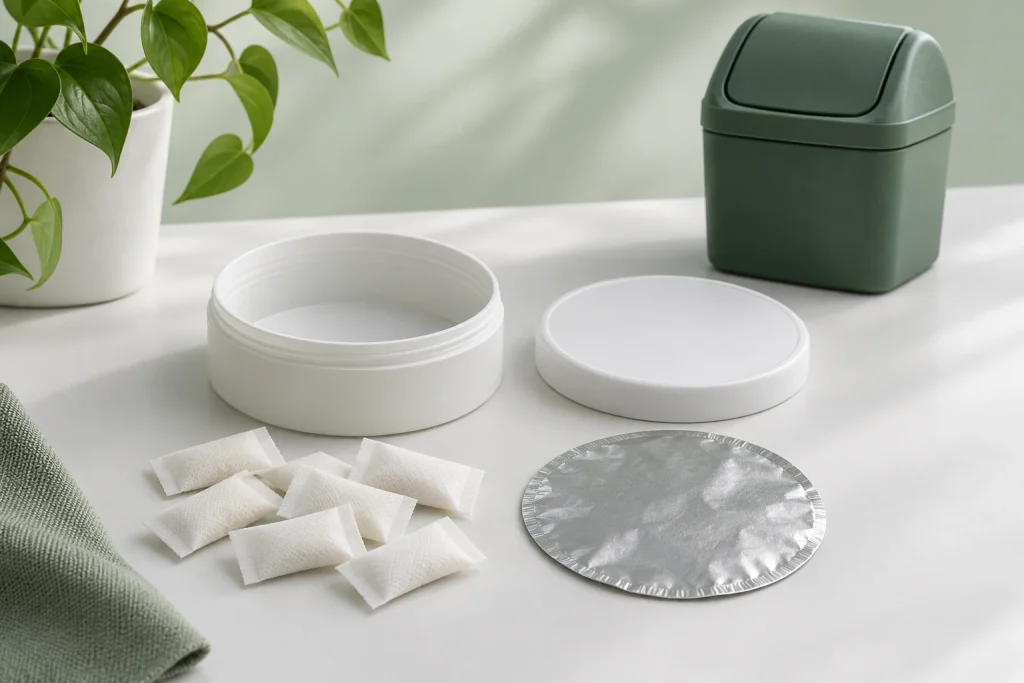
GuaranaPouches.com packaging guide for adult users and brand owners. Environmental claims require evidence for the actual item. This page does not certify any pouch, can or material.
Identify what the environmental claim covers
Questions about pouch litter appear in a Reddit discussion about decomposition and a discussion about throwing portions outdoors. Those threads concern snus, not guarana products. Their relevance here is the assumption that plant-derived contents make the entire item suitable for disposal outside. That assumption should not be transferred between products.
Ask whether a claim describes the filling, pouch fabric, whole used pouch, or empty container. A statement about one component cannot establish the behavior of the others. For private-label artwork, identify the component in the wording and keep supporting documents under its material code. If the supplier changes the film, binder, adhesive or liner, recheck the claim rather than leaving an old logo on new packaging.
Distinguish composting evidence from general material language
The US Federal Trade Commission’s Green Guides summary says compostability claims need reliable scientific support covering all materials in the claimed product or package. It also distinguishes home composting from facilities that provide conditions a household pile may not. “Plant-based” or “cellulose” is not that evidence.
A purchaser should ask for the scope of any certification and the exact item tested. Does it cover a bare web material, a sealed empty sachet or the filled product? What environment and disposal route are specified? These questions matter before a brand puts a compostability symbol on a can. A test document for one component is not permission to imply that every component, including contents, will behave identically. Do not dispose of pouches outdoors as a way to test the claim.
Check local acceptance before sorting the can
A recycling symbol or resin code does not tell you that your local collection accepts that container. Empty the can and check the instructions for its body, lid and any removable liner. Keep used pouches out of the container being sent for recycling. A catch compartment is temporary storage for used portions, not a separate recycling stream.
In its US guidance, the FTC uses access for at least 60% of consumers or communities where a product is sold when discussing an unqualified recyclable claim. That threshold concerns marketing language; it is not a prediction that 60% of cans will be recycled. Your local collection’s acceptance rules still decide what belongs in the bin. See EPA’s recycling questions for the distinction between plastic markings and collection availability.
Give buyers a component-level disposal brief
Packaging design work should produce instructions that match the actual construction. Ask the supplier to identify the can body, lid, liner, label and pouch web separately, with material specifications and any relevant disposal evidence. Avoid a single “eco-friendly” checkbox in the artwork brief. It leaves the reader unable to tell what was evaluated.
- Component name and material code.
- Claim scope and the supporting test or certificate.
- Home or industrial composting conditions, if claimed.
- Target-market collection instructions.
- Change-control responsibility for materials and artwork.
Food-contact suitability is a different assessment. Our food-contact and migration guide covers that evidence. Passing a food-contact review does not establish recyclability or compostability. Bring both requirements into a private-label packaging brief before artwork approval.
Frequently asked questions
Does guarana filling make the whole pouch compostable?
No. Evidence must cover the item being claimed, including its fabric and other components. Botanical filling alone cannot substantiate a whole-pouch compostability statement.
Can industrial-compostable pouches go into a home compost bin?
Do not assume so. Home and industrial conditions differ. Follow the specific certification and disposal instructions, and confirm that the receiving facility accepts the item before using that route.
Can used pouches stay inside an empty can placed in recycling?
Remove them. Used pouches are not part of the can’s recycling stream. Dispose of them according to the label and local rules, then follow local instructions for the empty container and lid.
Does a recycling triangle mean my local service accepts the can?
No. A material marking does not establish local collection or sorting capability. Check the local authority or collection provider’s instructions for that container type and its components.
Does the FTC’s 60% threshold mean a can is 60% recyclable?
No. It concerns access to recycling facilities when assessing an unqualified US recyclable claim. It is not a material composition percentage or a measured recycling rate.
Can a brand use a supplier’s pouch-web certificate on the entire packaged product?
Only if the certificate’s scope supports that claim. Check the tested construction and permitted wording. Evidence for an unfilled material cannot automatically be extended to a filled pouch, liner, label and can.
References and discussion context
Reviewed 16 November 2026. FTC and EPA sources support the environmental-claim and recycling explanations. Reddit snus discussions supply adjacent user-question context only; no nicotine-product composition or safety claim is transferred to guarana pouches. The supplier checklist is original editorial guidance, not a certification or legal opinion.