
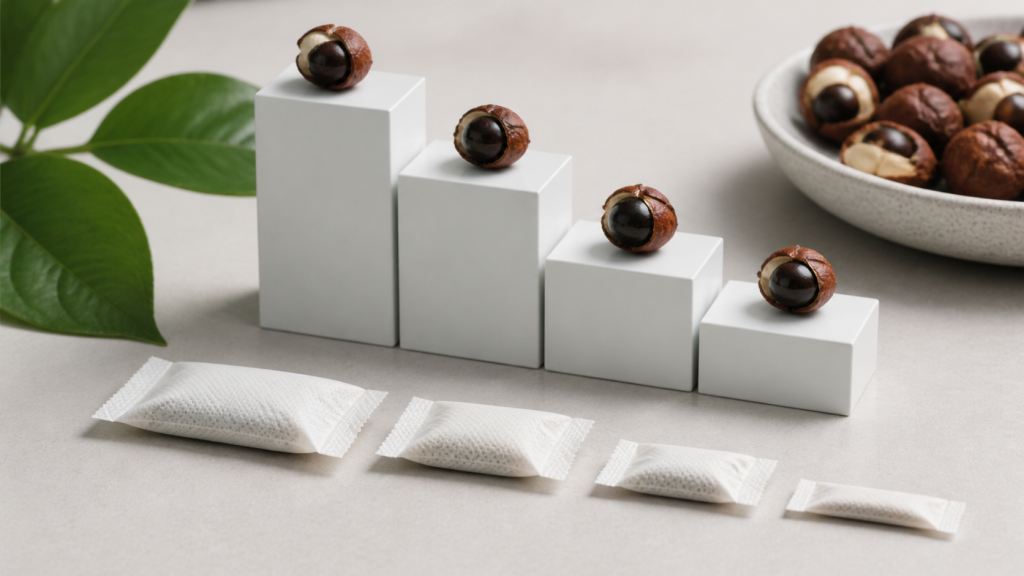
A guarana pouch can contribute to caffeine tolerance because guarana supplies caffeine. The delivery format and botanical name do not make repeated exposure biologically invisible.
Tolerance is about repeated caffeine exposure
With regular use, some people notice that the same caffeine dose feels less pronounced. They may then increase frequency or combine pouches with coffee and energy drinks. That escalation can make it harder to see the true daily total. A pouch made with 250 mg of 20% caffeine guarana extract theoretically contributes 50 mg—so four pouches plus two coffees is not a “four-pouch day”; it is a multi-source caffeine day.
Tolerance is not the same as product failure
A weaker subjective effect does not prove that the pouch has lost caffeine or stopped releasing it. Ingredient assay, finished-pouch content and release testing answer quality questions. Personal perception is influenced by habitual intake, sleep, stress and expectations.
What withdrawal can look like
People who regularly consume caffeine may experience headache, fatigue, reduced alertness, low mood or irritability after abruptly stopping or sharply reducing intake. FDA advises that people who want to cut back generally do so gradually because withdrawal is unpleasant even though it is not usually considered dangerous.
Why “natural caffeine” changes none of this
The caffeine molecule remains caffeine whether it comes from guarana, coffee, tea or purified caffeine. Guarana contains other plant constituents, but that does not justify “non-habit-forming,” “no tolerance” or “no withdrawal” claims.
A clearer way to reduce intake
Record milligrams from every source for several days. Then reduce total intake in measured steps rather than replacing a pouch with an uncounted coffee. Sleep disruption, anxiety, persistent palpitations or escalating use are good reasons to reconsider the routine and obtain professional guidance where appropriate.
Reference
Content reviewed: . Review dates indicate editorial maintenance, not a new clinical study.