
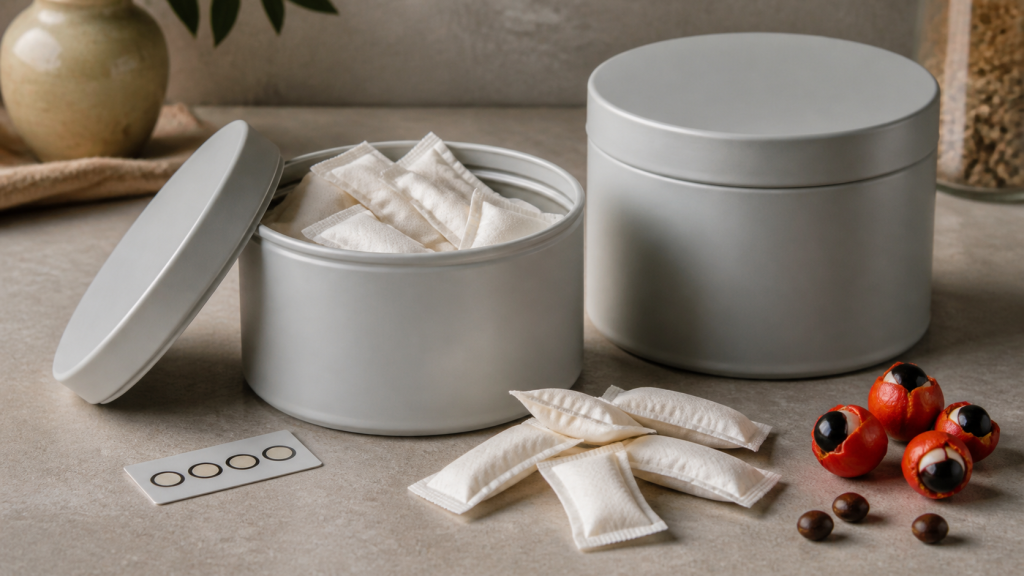
After opening, the can becomes part of the product’s stability system. The goal is not simply to keep the pouches “cold”; it is to preserve the moisture and flavor profile established for that specific formula.
Close the lid promptly
Repeated exposure to ambient air can dry a moist pouch or allow a dry pouch to absorb humidity. Either direction may change texture, flavor delivery and paper behavior. Reseat the lid fully after removing a pouch and avoid leaving the can open on a desk, in a vehicle or beside a shower.
Heat accelerates practical quality loss
A hot car, direct window light or heating appliance can stress flavor components and the container closure. Caffeine may be analytically stable while the pouch becomes unacceptable because aroma fades, off-notes develop or the nonwoven dries and hardens.
Refrigeration is product-specific
Do not assume every guarana pouch belongs in a refrigerator. Moving a cold can into warm humid air can create condensation, while some formulas and packages may have manufacturer-validated refrigerated instructions. Follow the stated storage conditions rather than inventing a universal rule.
Keep moisture and contamination out
Use clean, dry hands; do not return a used pouch to the can; and avoid transferring contents into an unqualified container. If a can includes a functional inner feature, liner or humidity-control element, removing it may change performance.
Watch for signs of deterioration
Discard pouches with damaged seams, unexpected discoloration, unusual odor, visible contamination or major texture change. An expiry date assumes correct storage. It does not guarantee quality after prolonged heat exposure or careless handling.
Does storage change the “20% caffeine” figure?
The 20% value normally belongs to the standardized guarana extract specification. Finished-pouch caffeine and shelf life must be supported separately. Proper storage protects the complete system—flavor, moisture, paper, microbiology and packaging—not merely the caffeine molecule.
Reference
Content reviewed: . Review dates indicate editorial maintenance, not a new clinical study.