
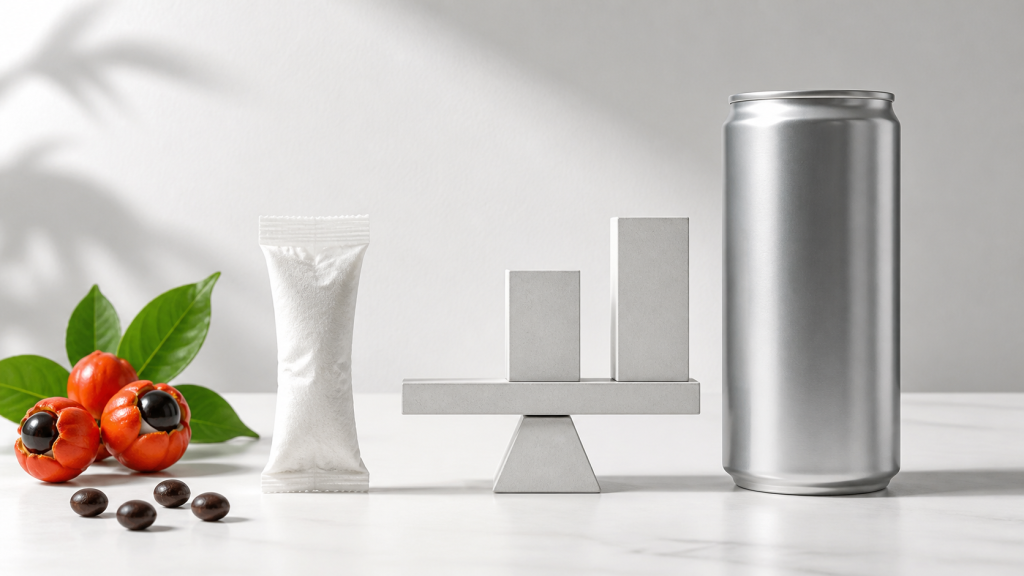
A guarana pouch and an energy drink can deliver caffeine without being nutritionally or practically equivalent. The fairest comparison uses a declared serving, measured caffeine and the complete ingredient list.
Start with milligrams, not container size
EFSA gives approximate examples of 80 mg caffeine in a 250 mL energy drink and 90 mg in a 200 mL filter coffee, while stressing that actual products vary. A pouch made with 20% guarana extract might be formulated at 30, 50 or another caffeine level. “One pouch versus one can” is meaningless until both numbers are known.
Sugar is a separate variable
Many energy drinks contain sugar, although sugar-free versions are common. A pouch does not involve drinking a sweetened beverage, but it may contain sweeteners, flavors, humectants and acidity regulators. “Sugar-free” should not be stretched into “healthy,” and caffeine safety remains independent of sugar content.
| Question | Guarana pouch | Energy drink |
|---|---|---|
| Caffeine | Check mg per pouch | Check mg per can and servings per can |
| Sugar | Usually no beverage sugar load; verify formula | Varies from sugar-sweetened to sugar-free |
| Use format | Small oral pouch; no liquid volume | Consumed as a beverage |
| Main mistake | Counting extract mg as caffeine mg | Ignoring multiple servings or large can size |
“Natural energy” does not change the dose
Guarana is a botanical source of caffeine. It does not make a high caffeine dose inherently gentler. Compare total daily intake from every source and consider timing; consuming either format late in the day can interfere with sleep.
What transparent brands publish
A strong comparison page states caffeine per unit, ingredient sources, serving definition and relevant warnings. It avoids claiming that a pouch hydrates, replaces sleep or provides a guaranteed release duration without direct evidence.
References
Content reviewed: . Review dates indicate editorial maintenance, not a new clinical study.