
If a new can of guarana pouches feels different from the previous one, preserve the packaging and report the specific difference. Taste, color or texture alone cannot identify a formulation error, counterfeit product or caffeine level. A useful investigation connects the observation to a product variant, lot and purchase record.
GuaranaPouches.com quality-communication guide. The workflow below is an editorial recommendation, not a finding about any named brand or a claim that a particular batch is defective.
Describe the change without diagnosing its cause
In a discussion comparing non-nicotine pouches, a commenter describes a later purchase with a different shape and texture. An adjacent nicotine-pouch discussion illustrates a different problem: inferring hidden caffeine or contamination from an unexpected flavor. These are unverified user observations, not proof of either cause, and the active ingredients differ.
A report should distinguish an observable change from a suspected explanation. “The seam opened before use” is more useful than “poor quality.” “This can has a different smell from the previous lot” preserves the observation without claiming contamination. Record whether it affected one pouch or several and whether the can had already been opened. Do not continue tasting a suspicious product to build a larger sample.
Keep the evidence that identifies the product
Photograph the can before throwing it away. Include the product name, variant, lot code, best-before date and the affected pouch if this can be done safely. Keep the receipt or order number and note when the package arrived and was first opened. Do not publish personal addresses or medical details in a public forum.
- Exact SKU and labeled caffeine strength.
- Lot code and date marking, photographed clearly.
- Seller and order reference.
- What changed, when noticed and how many units were affected.
- Whether the seal was intact on arrival.
- Relevant storage or delivery conditions, described without guessing temperatures.
This information helps the brand locate the applicable record. It does not establish the cause by itself. If return samples are requested, ask how they should be packed and shipped; avoid mixing different lots or returning used pouches without instructions.
Separate a quality complaint from a health concern
A flavor preference, damaged seal and serious reaction need different responses. Stop using a product that causes concerning symptoms. Seek appropriate medical help for significant or persistent symptoms; urgent symptoms such as breathing difficulty or chest pain require urgent assessment. A support ticket or replacement can is not a medical evaluation.
For products sold as dietary supplements in the United States, FDA explains how to report a suspected serious reaction. Reporting does not require a consumer to prove causation first. The appropriate authority and reporting route depend on jurisdiction and product classification. Keep that distinction explicit when directing a customer. Do not announce that an entire batch is safe because another user had no symptoms, or unsafe because one online comment alleges a problem.
Use complaints to tighten sample approval
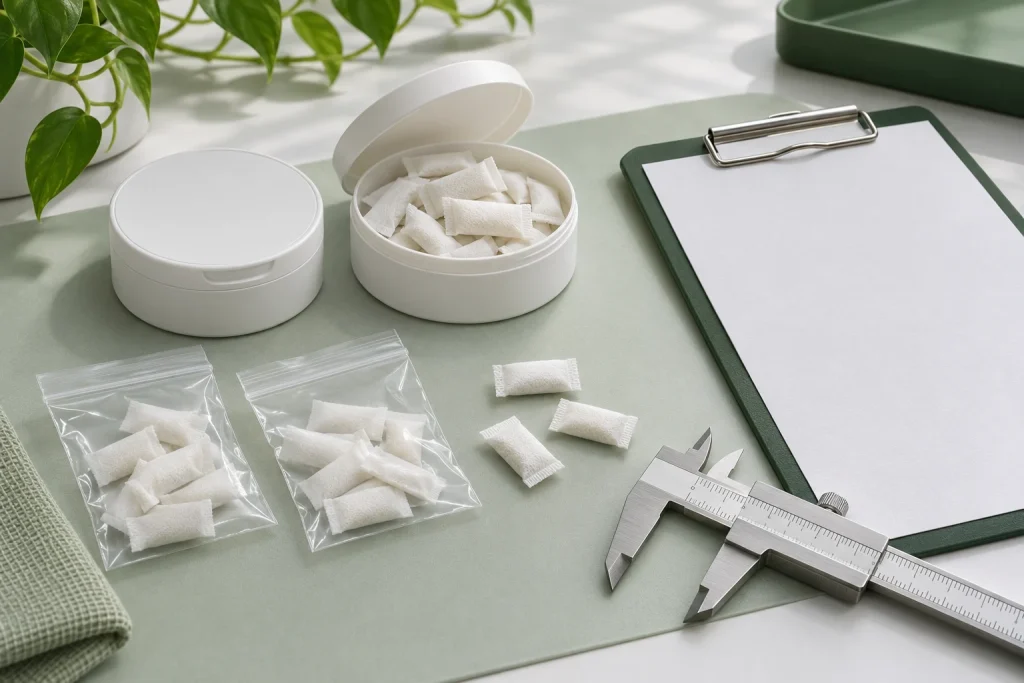
For a private-label project, retain an approved reference sample together with its formula version, packaging specification and approval date. Record which characteristics were agreed: pouch dimensions, seam appearance, fill characteristics and a written sensory description. A photograph alone cannot document all of them. A production investigation can then compare the complaint against both the specification and retained samples.
Our manufacturing-process page explains the production sequence; the lot-traceability guide covers record links. This article adds the customer-facing evidence needed to start that work. Ask the supplier for an investigation outcome that separates confirmed findings, possible causes and unresolved questions. If an approved change was made, document which lots received it before updating customer-facing descriptions.
Frequently asked questions
Does a different flavor prove that caffeine or another ingredient was added by mistake?
No. Flavor is not an identification test. Stop using a suspicious product, preserve its details and contact the brand. Confirming composition requires appropriate records and, where needed, laboratory analysis.
Does a change in pouch shape prove the product is counterfeit?
No. Shape alone cannot authenticate it. Send the brand the lot code, seller information and packaging photographs, and ask whether the variant or packaging specification changed.
What can I provide if I have already thrown away the can?
Send the order reference, seller, exact product name, purchase date and any photographs you retained. State that the lot code is unavailable. Do not invent one from an older purchase.
Should I open another can to taste-test a suspected problem?
Do not use additional product to investigate a safety concern. Keep remaining cans identifiable and follow the brand’s return instructions. Medical concerns should be assessed independently of the product complaint.
Does a refund confirm that the manufacturer found a defect?
No. A refund or replacement is a customer-service action. Ask for the investigation’s actual conclusion before treating it as evidence of a manufacturing defect or a confirmed formulation change.
What should an OEM buyer retain after approving a sample?
Retain the approved sample, formula and packaging versions, dated approval and measurable acceptance criteria. Specify retention conditions and responsibility in the quality agreement so later comparisons use an identifiable reference.
References and discussion context
Reviewed 16 November 2026. Reddit discussions are linked as examples of questions and observations, not as evidence against a brand. FDA supports the reporting guidance. The complaint fields and sample-approval workflow are original editorial recommendations; they are not a statement of every legal obligation or a description of a completed investigation.